
Tire Size Comparison Calculator
Compare two tire sizes by outside diameter, sidewall height, circumference and ground clearance. Estimate actual speed from your speedometer reading.
Calculate
Outside diameter difference
Worked example
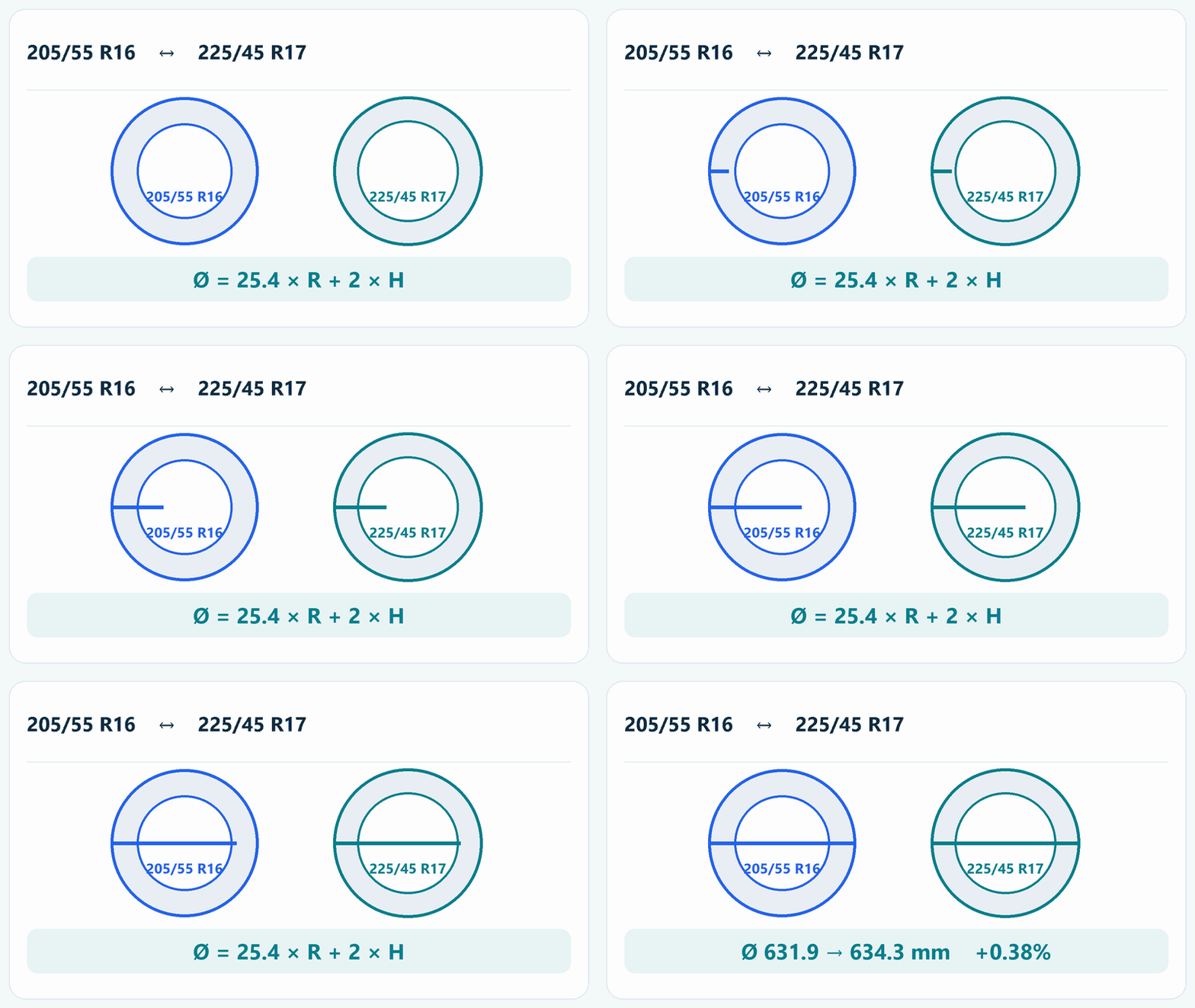
Formula and method
Read the width, aspect ratio and rim diameter from the sidewall. The result compares nominal dimensions. Check approved sizes, load and speed ratings, and clearance for your vehicle before fitting a tire.
How to use the calculator
Compare the nominal dimensions of a current tire and a possible replacement. The calculator uses the numbers on the sidewall to estimate outer diameter, circumference, sidewall height and the speed change caused by a different diameter. Use those figures to narrow down which sizes are worth checking for your vehicle.
- Read the size as three numbers. In 205/55 R16, 205 is the nominal width in millimeters, 55 is the sidewall height as a percentage of the width, and 16 is the rim diameter in inches. The R indicates radial construction.
- Enter the size your speed comparison should be based on as the original. Enter the three numbers for the candidate separately. Use the same order for both sizes.
- Choose km/h or mph and enter a speedometer reading. Read the diameter difference first, then compare sidewall heights and the estimated speed in the chosen unit.
Worked examples
205/55 R16 compared with 225/45 R17
The outer diameters are 631.9 mm and 634.3 mm. The second is 2.4 mm larger, about 0.38%. The radius grows by 1.2 mm, and a reading of 100 km/h corresponds to an estimated 100.38 km/h if the speedometer was accurate with the first tire.
225/45 R17 compared with 225/40 R18
The rim grows an inch, while the sidewall drops from 101.25 mm to 90 mm. The outer diameter therefore rises only from 634.3 mm to 637.2 mm. Checking the sidewall and outer diameter separately shows how the two changes interact.
How to read the result
A positive diameter change means the candidate travels farther per revolution. A negative value means it travels less far. The clearance figure measures half the difference in diameters, which estimates the change in static ride height using the nominal radius. Actual rolling dimensions vary with pressure, load, tread and construction.
Frequently asked questions
Does a small diameter difference mean the tire fits?
Check the vehicle manufacturer’s approved sizes. Wheel width and offset, load index, speed rating and room around the tire also matter. The geometric comparison covers the nominal dimensions.
Will my speedometer match the estimated speed?
The estimate assumes the original reading was accurate and applies the diameter ratio. Compare the result in the same unit as the entered speed. A vehicle can already have a difference between displayed and actual speed.
What does the clearance change tell me?
It compares theoretical radii at the wheel center. Check the space around the tire separately, including when the steering is turned and the suspension is compressed.