Interactive clothing size finder and converter
Clothing Size Converter and Size Finder
Find a practical clothing size from your measurements or convert a known size between international systems. Compare nearby sizes, fit preference and garment type before you shop.
11 size systems · women · men · unisex · childrenFind a size from body measurements
Choose who the garment is for and enter the measurements you know. More relevant measurements usually produce a stronger match.
Convert a known clothing size
Select the size group, source system and known size to see the closest equivalents. Brand sizing may still differ.
Quick international clothing size charts
These charts are general body-measurement guides, not a replacement for a brand’s own chart. Measurements are shown in centimetres.
| Size | Chest or bust | Natural waist | Hips | US | UK | EU | JP | CN | KR |
|---|
Recommended size
Your size match
How the recommended size may fit
Closest sizes by country and system
Measurement-by-measurement match
Use this as a starting point. Always check the specific brand’s size chart, garment cut and product reviews before ordering.
How to measure for clothing
Keep the tape level and comfortably close to the body. Measure over light clothing, breathe normally and do not pull the tape tight.
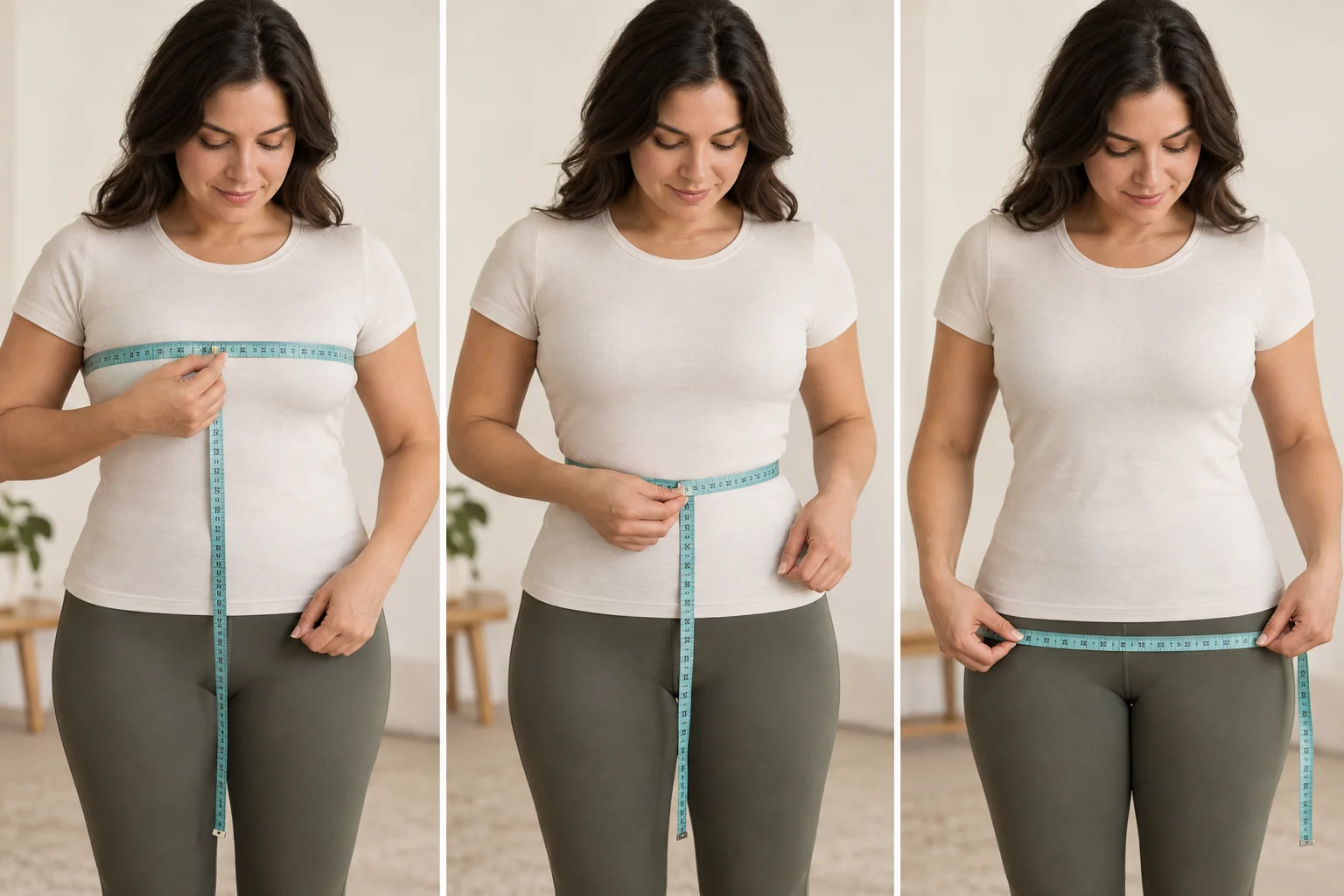
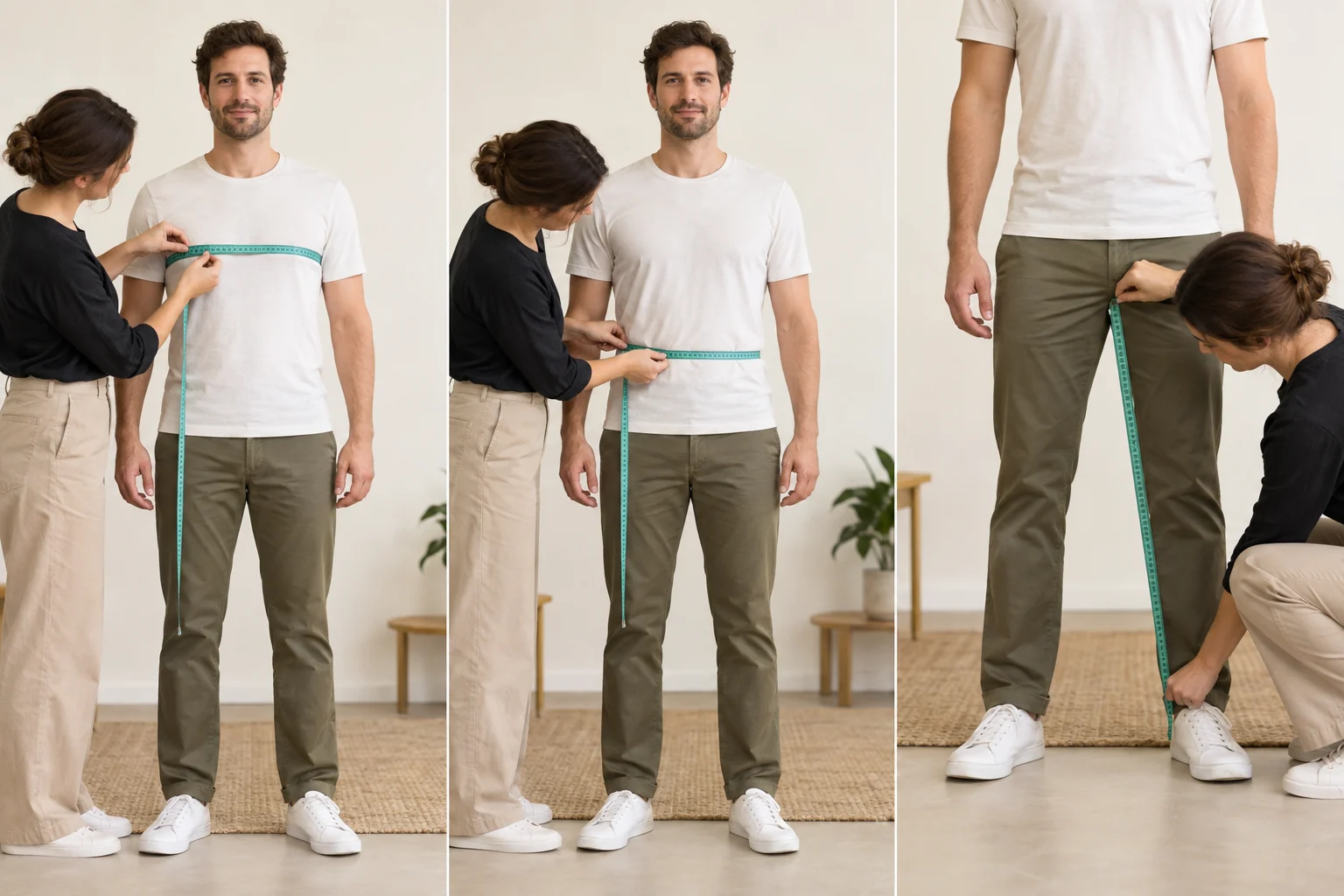
- Chest or bust: wrap the tape around the fullest part and keep it horizontal across the back.
- Waist: measure the natural crease, usually above the navel, without holding your breath.
- Hips: stand with feet together and measure around the fullest part of the seat.
- Inside leg: measure from the crotch seam to the desired trouser hem.
How the size finder works
The finder compares each relevant measurement with broad international body-size ranges. For tops it prioritises chest and waist; for dresses it also uses hips; for trousers it prioritises waist, hips and inside leg. It then adjusts the suggestion conservatively for the selected cut and fabric stretch.
What if I am between two sizes?
Choose according to the garment. For a fitted shirt or jacket, chest and shoulder comfort usually matter most. For trousers, prioritise waist and hips. Select the larger size for a roomier cut or non-stretch fabric, and compare the adjacent-size cards shown in the result.
Why clothing sizes differ by country
A number such as 38 does not represent the same garment everywhere. Women’s EU, French and Italian numbering can differ, while men’s UK and US labels often follow chest measurements. Asian labels also vary by manufacturer, so the converter shows practical equivalents rather than claiming an exact universal standard.
Children’s sizing and growth
Children’s labels are usually based on age or height, but growth and body proportions vary. Height and chest measurements are more useful than age alone. Do not automatically buy several sizes larger; check garment length, intended ease and the brand chart.
Before you order
- Compare your body measurements with the exact product chart.
- Check whether the chart lists body dimensions or finished garment dimensions.
- Read fit notes for slim, regular, oversized or unisex cuts.
- If you fall between sizes, use the largest relevant measurement and your fit preference.
- Review the fabric composition and stretch, especially for fitted garments.
- Keep the return policy in mind when trying a new brand.
Related clothing and measurement tools
Continue with shoe size, length and weight conversions or check body measurements with the BMI calculator.
Clothing size converter FAQ
Are clothing sizes the same across all brands?
No. Each brand can use its own fit model, ease allowance and grading. Use the result as a starting size and confirm it with the product chart.
Should I measure my body or a garment that fits?
Use body measurements when the chart lists body dimensions. If a retailer publishes finished garment dimensions, compare them with a similar garment that already fits you.
How tight should the measuring tape be?
The tape should lie flat and level without compressing the body. You should be able to breathe and stand naturally.
Which measurement matters most for dresses?
Bust, waist and hips all matter. The measurement that requires the largest size is often the safest starting point, especially in non-stretch fabric.
How do unisex sizes fit?
Unisex garments often follow a straighter or traditionally men’s cut. Compare the chest measurement and garment length, then adjust for the fit you prefer.
Can age alone determine a child’s clothing size?
Age is only a rough guide. Height, chest and waist measurements provide a better estimate because children grow at different rates.
What should I do if the top and bottom need different sizes?
Use separate garment categories and choose the size that matches the relevant measurements. Many people need different sizes for tops and trousers.
Does fabric stretch change the recommended size?
Stretch can make a close fit more comfortable, but it does not make every garment one full size smaller. Check fabric content, cut and the brand’s fit advice.