
Lang
Aquarium planning, volume and equipment
Aquarium Volume Calculator
Calculate gross and estimated usable aquarium volume for six tank shapes. Account for glass, waterline, substrate, décor and a sump, then plan water changes, filtration, heating and label-based dosing.
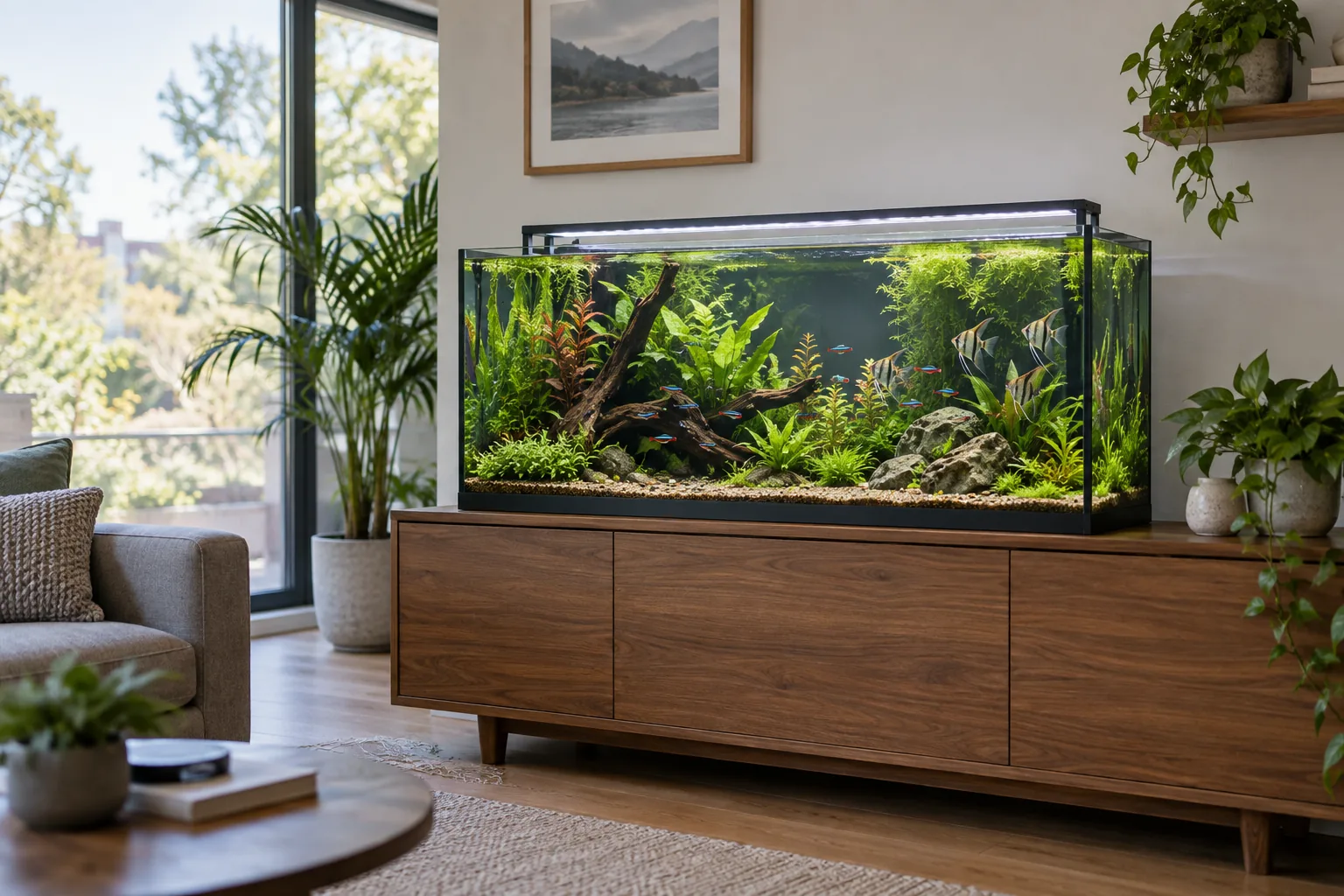
Build your aquarium profile
Choose a tank shape and enter its dimensions. Advanced adjustments refine the usable-water estimate.
Estimated usable water volume
Your aquarium volume plan
–L–––
Live tank profile
The water and substrate levels update with your entries. The diagram is illustrative and not an engineering drawing.
Gross volume retained–
Calculation breakdown
- Shape formula
- –
- Volume after glass adjustment
- –
- After waterline and substrate
- –
- After décor displacement
- –
- Operating sump contribution
- –
- Water density used
- –
Water-change amounts
Use the estimated usable volume when preparing replacement water.
Planning estimates
This calculator provides planning estimates, not structural, electrical, veterinary or chemical-treatment advice. Confirm load-bearing capacity, equipment sizes and all treatment doses with the relevant qualified professional or manufacturer.
Measure the inside of the tank
Measure clear internal dimensions wherever possible. Outside dimensions can overstate capacity because glass, frames and seams occupy space.
Plan water changes from usable volume
A nominal 200-litre tank rarely contains 200 litres of water after the air gap, substrate, rocks, wood and equipment are included.
Size equipment for the real water volume
Filter and heater labels often use aquarium capacity. Start with usable litres, then account for livestock, room temperature and manufacturer instructions.
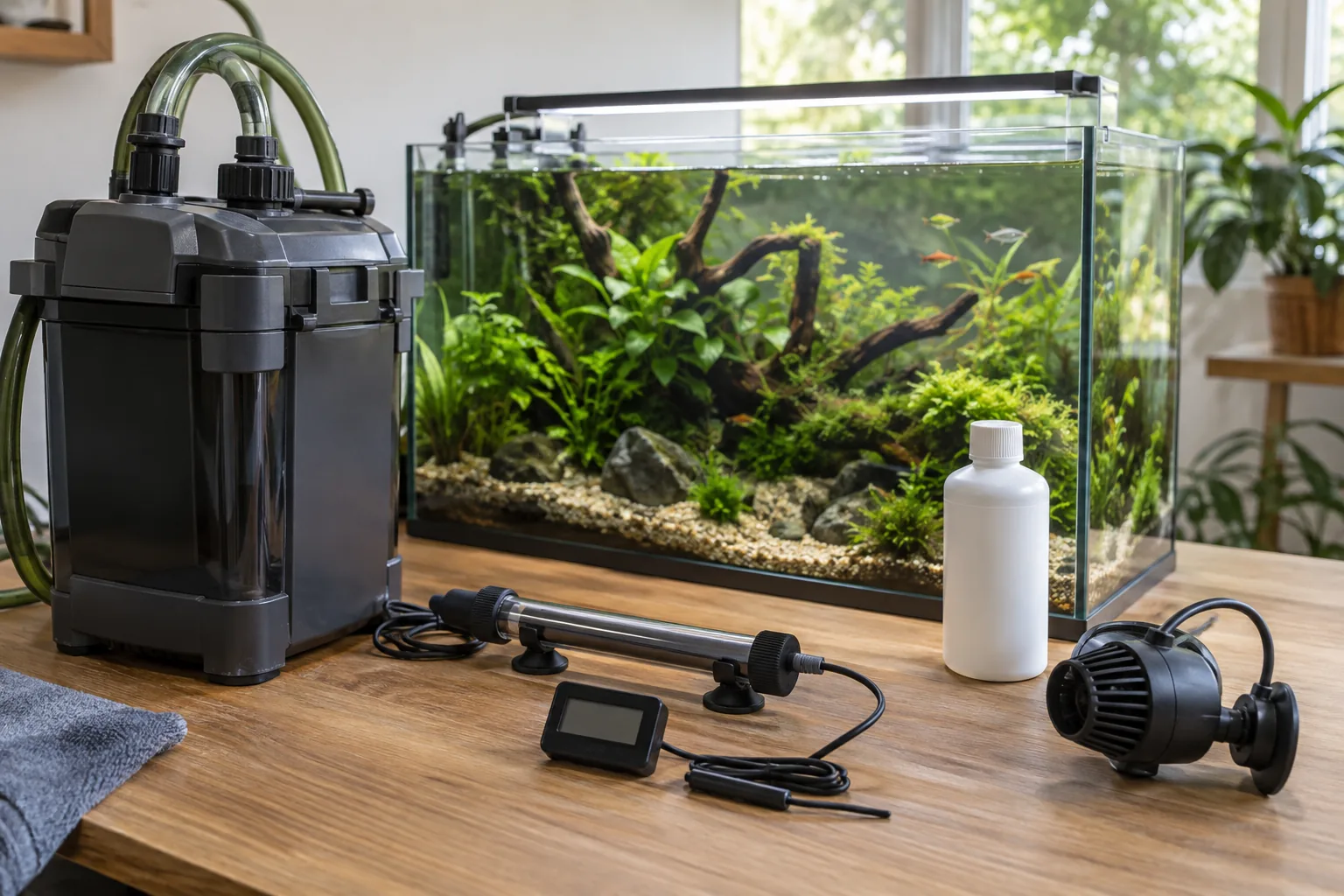
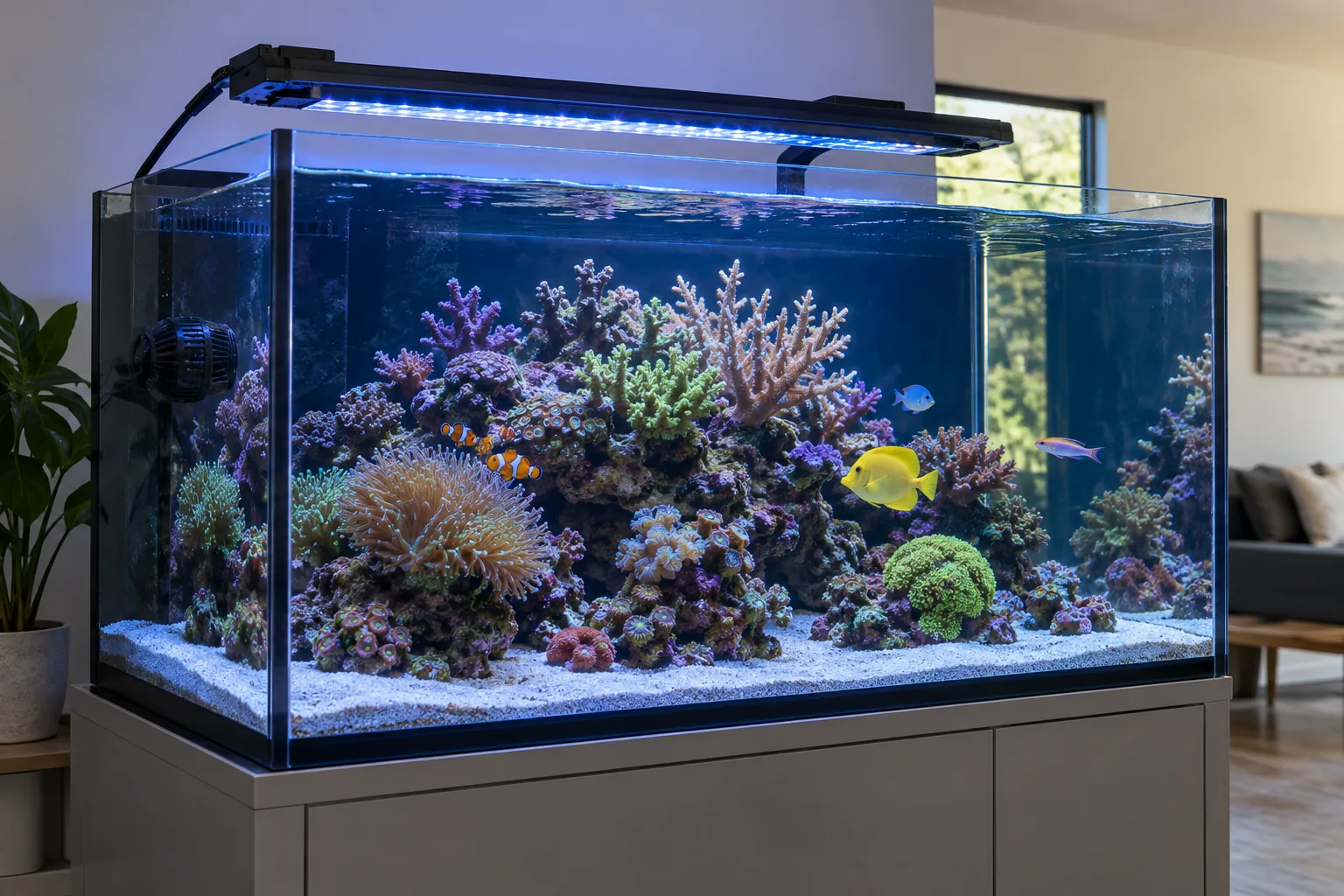
Freshwater, planted and marine tanks
Different aquarium styles may need different circulation and equipment choices. The calculator keeps volume geometry separate from husbandry decisions.
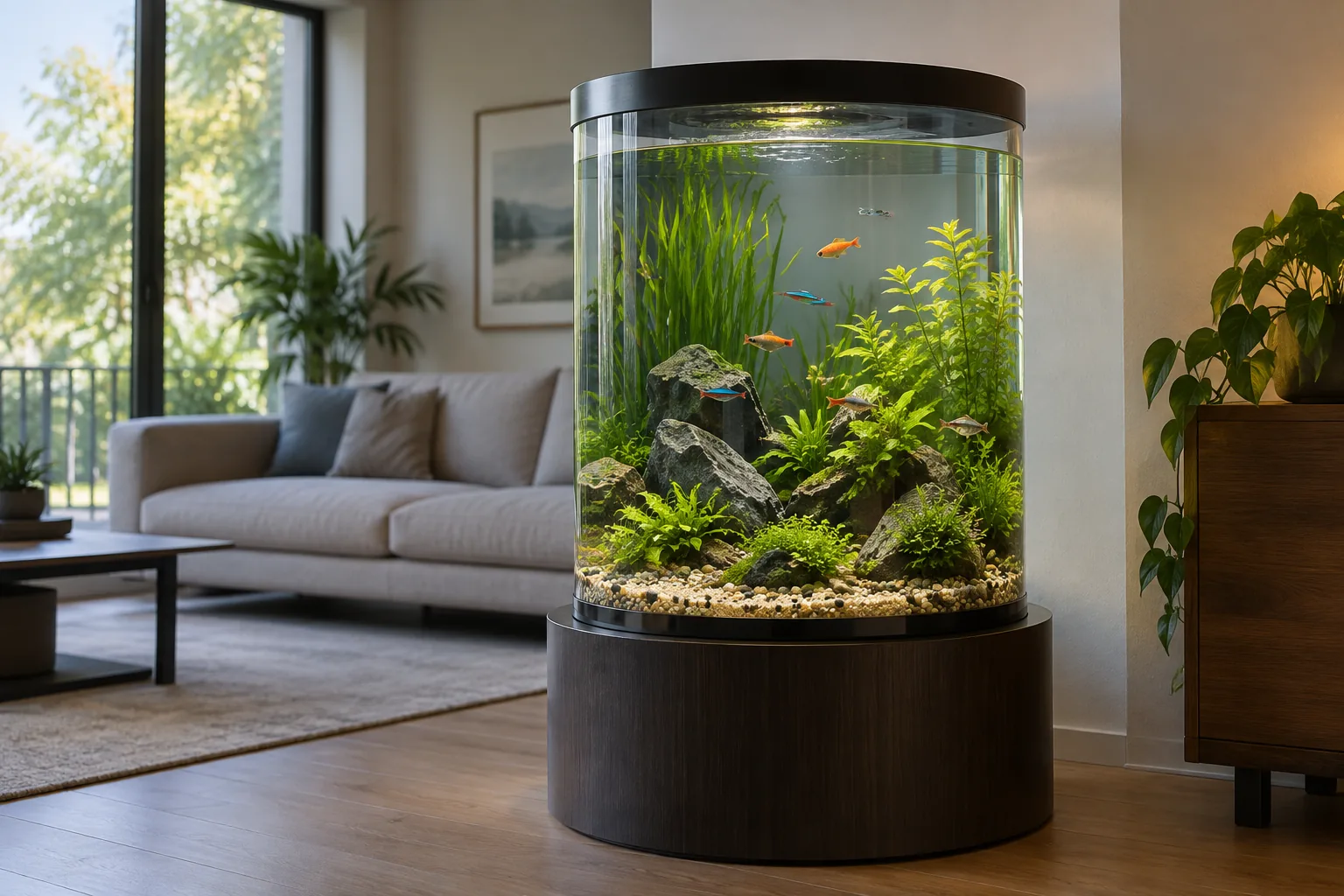
Tank shapes and assumptions
Rectangular, cube, cylinder, quarter-circle and regular-hexagon volumes use standard geometry. Bow-front and corner tanks vary by manufacturer, so their results are estimates.
Accuracy checklist
- Measure the inside glass surfaces instead of the cabinet or outside frame.
- Use the real fill line, not the full glass height.
- Estimate average substrate depth, including slopes.
- Use a conservative displacement percentage for rocks, wood and internal equipment.
- For a sump, enter the normal operating volume rather than its empty capacity.
- Do not use a simple volume rule alone to decide how many fish to keep.
Aquarium Volume Calculator FAQ
Should I measure the inside or outside of my aquarium?
Inside measurements usually give the best volume estimate. If only outside measurements are available, select outside dimensions and enter the glass thickness so the calculator can make an adjustment.
Why is usable volume lower than the advertised tank size?
Manufacturers often quote nominal or outside volume. The air gap, glass, substrate, rocks, wood, equipment and incomplete sump fill all reduce the water actually present.
Does aquarium water weigh one kilogram per litre?
Fresh water is close to one kilogram per litre, while saltwater is slightly denser. The displayed water weight excludes the tank, stand, substrate, décor and equipment.
How much water should I prepare for a water change?
The page shows common percentages based on estimated usable volume. Match the amount and frequency to your aquarium, livestock and water-quality plan.
Is the filter-flow estimate a strict requirement?
No. It is a starting range based on hourly turnover. Media, head height, plumbing, livestock and aquarium style can change the appropriate filter and circulation flow.
Can I use the dose helper for medicine?
Only use the exact ratio printed on the relevant product label or supplied by a qualified professional. The helper scales that ratio; it does not recommend a treatment or dose.
How accurate is the bow-front calculation?
It models the front bulge as half of an ellipse added to a rear rectangle. Real bow-front shapes differ, so a manufacturer’s internal-capacity figure or direct filling measurement is more accurate.
Can I use aquarium volume to calculate stocking?
Volume is only one factor. Adult fish size, behaviour, swimming space, filtration, oxygenation and water quality must also be considered for each species.